
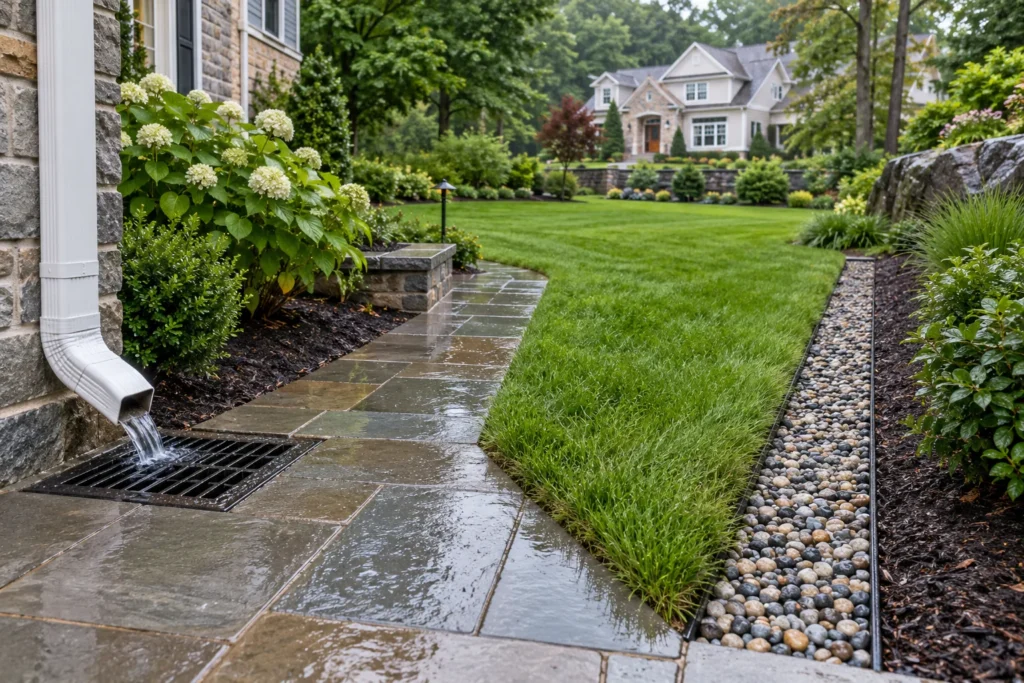
Comparing a french drain vs catch basin starts with identifying where the unwanted water comes from. A lawn that stays saturated below the surface is different from a low spot collecting runoff during a storm. Choosing hardware before understanding that difference can leave the original problem unresolved.
Both systems can be useful, and some properties need a combination. The important questions are how water reaches the area, where it can safely go, and whether the proposed system can be maintained. Here is a homeowner-focused way to work through the decision.
Understanding a french drain vs catch basin
What a French drain does
A French drain commonly uses a trench containing drainage aggregate and perforated pipe to intercept water within the ground. Its construction, depth and filtering details should suit the soil and the problem being addressed. It is not simply any buried pipe.
This approach may be considered where water moves through soil toward a problem area or where a persistently wet strip needs subsurface collection. It still requires an appropriate destination. Burying perforated pipe without understanding the water level and outlet does not create reliable drainage.
What a catch basin does
A catch basin receives surface water through a grate or other inlet. Water enters a collection chamber and travels through a connected outlet pipe. Depending on its design, the chamber can also provide space for sediment to collect below the outlet.
A basin can be useful at a deliberately graded low point near a patio, driveway or lawn. Water must actually reach the inlet, however. A grate installed higher than the surrounding puddle will not solve the grading problem.
Watch the property during rainfall
Observe from a safe location while rain is falling and again afterward. Note whether water arrives quickly across the surface, emerges along a slope, or remains after other areas dry. Photographs from several storms are more useful than a single picture of a wet patch.
Look at downspouts, paved surfaces and the ground near the house. A disconnected downspout extension or concentrated roof discharge may explain a localized problem. Correcting a clear source can be part of the solution, but avoid directing that flow into a different vulnerable area.
Record how the problem affects daily use. Is a walkway difficult to cross? Does a planting bed stay saturated? Is water approaching a doorway? These observations help establish priorities without assuming every wet area needs the same construction.
When surface collection may make sense
A catch basin is worth discussing when runoff converges at an identifiable location and can be directed to an inlet with appropriate grading. The grate, chamber and pipe must be selected together for the conditions, rather than chosen only for appearance.
Consider debris as well as water. A basin near deciduous trees may collect leaves, while runoff from bare soil may carry sediment. Access for inspection and cleaning should remain practical after the surrounding landscape is finished.
If the affected area includes a patio or walkway, review the surface with the drainage plan. Green Gold’s patios and hardscaping services can be considered alongside water management so new paving does not preserve an existing low spot.
When subsurface collection may make sense
A French drain may be appropriate where a site assessment identifies water moving through the soil that a subsurface system can intercept. The precise location matters: a trench placed beyond the source or at the wrong elevation may accomplish little.
Soil, groundwater and nearby structures affect the design. The filtering approach must allow water to enter while limiting soil movement into the system. A one-size-fits-all trench detail is not a substitute for understanding the property.
In a french drain vs catch basin comparison, surface puddles alone do not prove which system is needed. Water at the surface can result from compacted soil, unsuitable grading, a restricted outlet or subsurface conditions. Persistent water near a foundation deserves a qualified assessment.
The outlet matters as much as the inlet
Before excavation, establish a suitable discharge or infiltration strategy. A collection system that has nowhere appropriate to release water can back up. Elevation, soil conditions and existing infrastructure determine which options are practical.
Do not assume an underground connection, street discharge or neighboring low area is available for use. Confirm applicable local requirements and permissions before work begins. Drainage should not transfer the problem to another property or undermine a slope.
In Westchester County, properties can present very different grades and access conditions even within the same neighborhood. A proposal should explain the intended route, destination and maintenance access in plain language.
Comparing scope and future maintenance
Ask for a plan that identifies collection points, pipe routing, restoration and access. Clarify whether the work includes repairing disturbed lawn, replacing plants or resetting paving. Those details make proposals easier to compare.
For a catch basin, discuss clearing the grate and removing accumulated debris. For a subsurface drain, ask what inspection or cleanout access is included and how an obstruction would be investigated. Neither system should disappear beneath landscaping without a maintenance plan.
A useful french drain vs catch basin decision considers the whole system, not just the visible component. The University of Maryland Extension’s overview of stormwater practices offers background on considering runoff as part of a property’s landscape.
Plan the solution around your property
Start with Green Gold’s drainage and irrigation services when recurring water problems are affecting your yard. Bring photographs, note recent changes to paving or grading, and explain when the problem is most noticeable.
The right recommendation may involve source correction, grading, surface collection, subsurface drainage or a coordinated combination. You do not need to choose a product before seeking an assessment.
Ready to move beyond the french drain vs catch basin question? Request an estimate to discuss where water collects, how you use your property and the next steps for a drainage plan.