
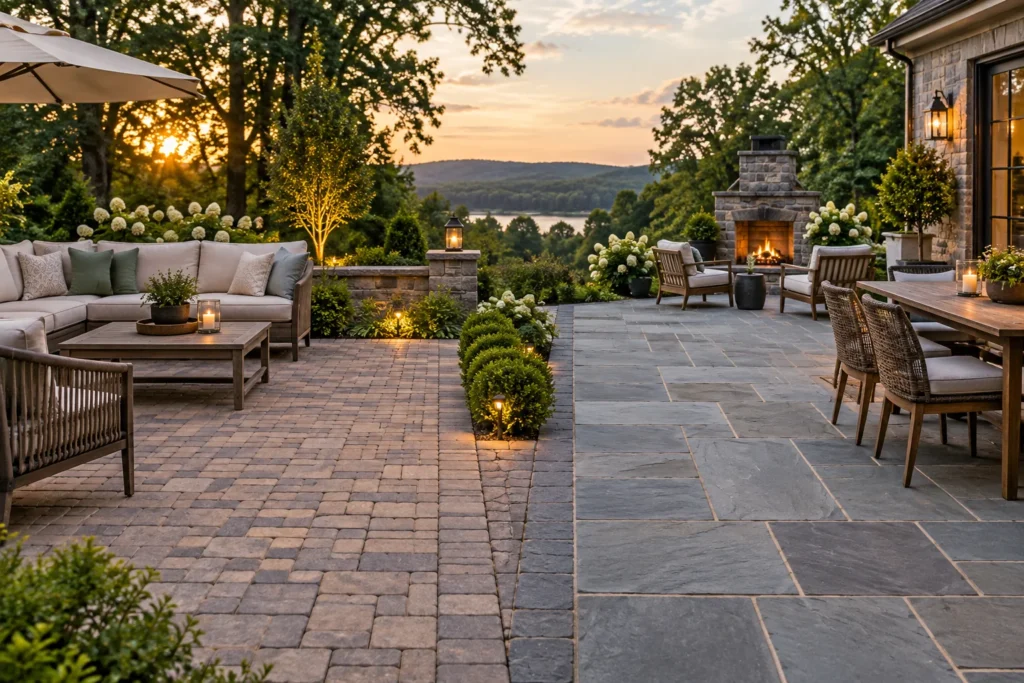
A patio should look right beside your home and work well for the way you spend time outside. When comparing pavers vs bluestone, appearance is only part of the decision. Surface texture, installation, maintenance and the conditions around your property also matter.
Neither material is automatically the better choice. This guide compares concrete pavers with natural bluestone so you can ask useful questions, review samples and plan a patio with realistic expectations.
What Are Pavers?
Pavers are individual paving units arranged to create a finished surface. The term can include several materials, but here it refers to manufactured concrete pavers. They come in different shapes, sizes, colors and textures, from smaller traditional units to larger contemporary formats.
A typical interlocking concrete paver patio uses a prepared aggregate base, a bedding layer, filled joints and edge restraints. Individual units can often be lifted and reset if repairs are needed. That flexibility is useful, although finding an exact color match later may be difficult if a product changes or weathers.
What Is Bluestone?
The bluestone commonly used for patios in the Northeast is a quarried natural stone, typically sandstone. It is available in rectangular pieces for organized patterns and irregular flagstones for a more informal layout. Natural variation gives each installation its own character.
Bluestone also comes with different finishes. Natural-cleft stone has a textured, layered surface; thermally finished stone offers a more consistent texture. Thickness and dimensional consistency vary by product. Ask to see the actual finish and material selection rather than choosing from the word “bluestone” alone.
Pavers vs. Bluestone: Appearance
Concrete pavers offer considerable control over the overall design. Repeating sizes, coordinated colors and contrasting borders can connect a patio to walkways or steps. Some products imitate natural stone, while others create a more uniform, geometric look. Repeated surface patterns may be more noticeable in certain products.
Bluestone offers variation in tone and texture that comes from the stone itself. A selected blue-gray palette can feel restrained, while a broader color range introduces warmer and more varied shades. Neither selection will be perfectly identical from piece to piece.
Compare several samples beside your siding, foundation and existing masonry. Look at them in sun and shade, and when wet. A small showroom sample may not communicate the color range of an entire patio.
Durability
Both materials can serve well outdoors when the specific product and installation are appropriate. In Westchester County, freezing weather makes drainage and foundation preparation especially important. A premium surface cannot compensate for a poorly prepared base or water collecting where it should drain away.
With pavers, ask whether the selected product is suitable for local freeze-thaw exposure and the intended use. With bluestone, discuss stone quality, thickness and the proposed setting method. Dry-laid and mortar-set installations have different construction and repair requirements; they should not be treated as interchangeable estimates.
Review transitions, steps and any areas that must support heavier features. If settlement occurs, the cause should be addressed before resetting the surface. Neither material is immune to movement, staining or damage.
Maintenance
Both patios benefit from sweeping, prompt attention to spills and periodic inspection. Leaves, soil and shaded damp areas deserve attention before buildup becomes difficult to remove. Follow the material supplier’s cleaning guidance, including any restrictions on pressure washing.
Paver joints may need replenishment or repair over time, depending on the jointing material and conditions. Bluestone care also depends on the installation: inspect filled joints on dry-laid patios and mortar joints on mortar-set work. Loose pieces or recurring puddles warrant more than cosmetic cleaning.
The Natural Stone Institute’s care and cleaning guide recommends appropriate neutral cleaners and explains that sealing is not necessary for every stone. Discuss whether sealing makes sense for your particular patio. Do not assume either material needs annual sealing, or that a sealer will make it stain-proof.
Cost Considerations
Compare complete installed proposals rather than material prices alone. Excavation, access for equipment, removal of an existing surface, base preparation, drainage, steps and edge details can significantly change the scope. A simple patio on an accessible site is a different project from a terraced space behind a house.
Material selection and labor also matter. Paver size, pattern and cutting requirements affect installation work. Bluestone selection, thickness variation and setting method can affect both preparation and fitting. There is no dependable universal price difference without defining those details.
Ask each contractor to describe the same patio dimensions and construction scope. Include allowances for necessary drainage work, then compare maintenance and repair considerations alongside the initial estimate. A lower proposal that leaves essential work undefined may not represent the same finished project.
Which Is Better for Your Property?
Start with how you want to use the space. Dining furniture, everyday foot traffic, gardening access and connections to the house should guide the plan before decorative details.
- Consider pavers if you value a coordinated range of shapes and colors, defined borders and the ability to lift individual units for certain repairs.
- Consider bluestone if natural variation and the character of quarried stone are central to the design, and you are comfortable selecting a specific finish and color range.
- Evaluate either option in person for surface comfort, texture and furniture stability. Ask how the selected finish performs when wet and how it should be maintained.
If easy movement is a priority, discuss joint width, surface evenness and transitions early. These details can matter more to everyday comfort than the material name. Keep a few spare pieces when practical, and ask your installer about future repair access.
When comparing pavers vs bluestone, the better choice depends on your property, design preferences and long-term maintenance expectations.
Patio Design in Westchester County, NY
A successful patio belongs to its property. Slope, nearby trees, roof runoff and the route between the home and garden all influence the design. Consider drainage and circulation together with the surface material so the finished space supports daily use.
Explore Green Gold Landscaping’s patios and hardscaping services to consider how a patio can connect with walkways, steps and other outdoor improvements. For properties in Westchester County and Putnam County, a conversation about the site and your priorities is a useful starting point.
Ready to compare options for your own yard? Request a landscaping estimate and tell us about your property, preferred style and how you hope to use the space.